You have seen the photos. The velour tracksuit, the rhinestone belt, the tiny tee that says everything without trying too hard. Then you search for it online and get page after page of brand-new copies that look a little too shiny and fall apart after three washes. If you have ever wondered where the real stuff lives, this guide is for you.
Finding authentic Y2K clothes, meaning pieces actually made in the late 1990s and early 2000s, is part treasure hunt and part patience. The good news is that there is still a lot of it out there. You just need to know where to look, what to type in the search bar, and how to check a piece before you pay. Let’s go shopping, darling.
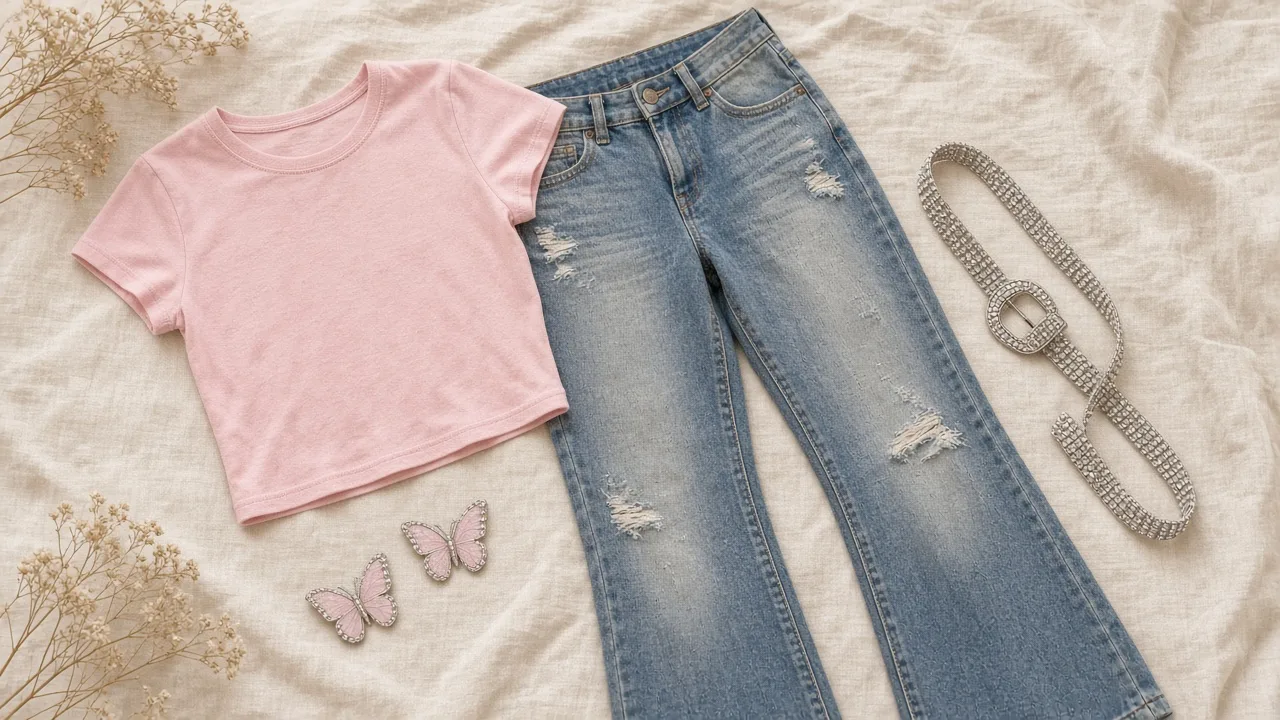
What counts as authentic Y2K clothes?
When people say “authentic Y2K clothes,” they usually mean garments produced roughly between 1997 and 2006. That window covers the early futuristic, silver-and-chrome look of the millennium years, plus the pink, sparkly, logo-heavy McBling style that peaked a few years later. (Curious about the difference? Our journal has a full guide on Y2K vs McBling.)
Authentic does not automatically mean better. A true vintage piece has history, unique fabric and that slightly worn-in softness you cannot fake. A modern reproduction can fit more reliably and be easier to find in your size. Both are fine. The only thing that matters is honesty: know what you are buying, and know what you are paying for.
Quick signs a piece is genuinely from the era
- The care label. Older labels are often thinner, sometimes faded, and list a country of manufacture and fiber content in a style that feels a bit dated. Many sellers photograph labels, and if they do not, ask.
- Fabric feel. Early-2000s baby tees were frequently cotton with a touch of spandex, slightly thicker than today’s ultra-thin fast-fashion knits.
- Construction. Look at seams, hems and zippers. Brand-name pieces from the era usually have tidy stitching and branded hardware.
- Sizing. Vintage sizes often run smaller than modern ones. A “Large” from 2003 may fit like a modern Small or Medium.
- Wear that makes sense. Gentle fading, a little pilling or a softened graphic are normal. Perfect, crisp, never-worn condition is possible (look for “deadstock” or “new with tags”), but it should come with proof.
Where to buy authentic Y2K clothes
There is no single magic shop. Most collectors mix a few sources, and each one has its own personality.
1. Local thrift stores
Thrift stores are where the hunt is most fun and the prices are lowest. Charity shops, church thrift sales and big chain secondhand stores all receive donations of early-2000s closets, especially as people clean out childhood bedrooms.
- Go often. Stock changes daily, and good pieces disappear fast.
- Check the kids’ and juniors’ sections. Many real baby tees were sold as juniors’ sizes and end up in the wrong rack.
- Look in accessories bins for rhinestone belts, butterfly clips, tinted sunglasses and tiny shoulder bags.
2. Depop
Depop is practically built for Y2K. Sellers style and photograph pieces in a way that makes browsing feel like flipping through a magazine. The trade-off is that prices can be higher, because sellers know what is trending.
- Follow sellers whose taste you love. Their new listings show up in your feed.
- Ask for measurements, label photos and close-ups of any flaws before buying.
- Read reviews. A seller with many happy buyers is worth a few extra dollars.
- Be cautious with listings that say “Y2K style” or “Y2K inspired.” That phrase often means a new piece, not a vintage one.
3. eBay
eBay is the giant archive. Because people have been selling early-2000s clothing there since the early 2000s, you can find almost anything if you dig. Auctions can be a bargain, and “Buy It Now” listings are great when you know exactly what you want.
- Use saved searches and alerts for specific brands and sizes.
- Sort by “newly listed” to catch fresh pieces before others do.
- Check the item specifics and seller location. Factor shipping into your budget.
- Look for sellers who list “vintage” with a decade, and compare photos to known pieces from the era.
4. Poshmark and other resale apps
Poshmark tends to have lots of brand-name mall pieces, often from people clearing out their own closets rather than professional resellers. That can mean friendlier prices and the ability to make offers. Other resale apps, such as Mercari, Vinted and ThredUp, also carry early-2000s pieces depending on your region.
- Bundle items from one closet to save on shipping.
- Make polite, reasonable offers. Many sellers accept them.
5. Vintage shops and pop-up markets
Curated vintage shops and flea markets do the hunting for you. Prices are higher than thrift, but you can try things on, feel the fabric, and talk to someone who knows the history. Weekend markets and vintage fairs are also lovely for finding accessories and meeting fellow collectors.
The secret: search by brand, not by “Y2K”
This is the single biggest tip in this guide. If you type “Y2K top” into any resale app, you will mostly get new, mass-produced pieces tagged with a trendy keyword. Real vintage often gets listed by its brand name and item type, because the seller is simply describing what it is.
Instead, search for brands that were everywhere in the era, plus the item you want. A few starting points:
- Juicy Couture for velour tracksuits, zip hoodies and terry sets
- Baby Phat for fitted tees, logo pieces and bold denim
- Von Dutch for trucker hats and graphic tees
- Ed Hardy for tattoo-print tees and rhinestone details
- Mall and juniors brands of the time for low-rise jeans, cami tops and baby tees
Combine the brand with specific words: “velour,” “rhinestone,” “low rise,” “baby tee,” “cropped,” “vintage 2000s,” “early 2000s” or “deadstock.” Try misspellings too. Listings with typos get fewer views and sometimes lower prices.
One honest note: popular logo brands are also widely counterfeited, and some have been relaunched with new collections. A brand name alone does not prove a piece is vintage. Check labels, tags and construction, and compare against photos of confirmed originals before paying collector prices.
Always measure, never guess
Vintage sizing is the most common reason a dreamy find turns into a disappointment. Sizes have shifted over the decades, and juniors’ sizing in particular ran small. Before buying, compare the seller’s measurements to a piece you already own and love.
- Lay your favorite fitted tee flat.
- Measure straight across the chest, armpit to armpit.
- Measure the length from the top of the shoulder to the hem.
- For jeans, measure the waist flat, the rise, and the inseam.
- Ask the seller for the same measurements, and allow for a little stretch in cotton-spandex knits.
For more on how a baby tee should fit, our baby tee sizing and fit guide walks through it step by step.
Are modern copies okay?
Absolutely, as long as everyone is honest about what they are. Plenty of new brands make pieces inspired by the early 2000s, and they can be a great choice when you want a reliable size, a fresh fabric or a specific color. The problem is only when a new piece is sold as “vintage” at vintage prices.
A few ways to shop modern copies thoughtfully:
- Choose pieces with clear fabric details and care labels.
- Look for better-quality basics you will wear for years rather than ultra-cheap trend pieces.
- Mix one or two new basics with authentic accessories. A new baby tee plus a real vintage rhinestone belt is a perfectly balanced look.
Speaking of new basics: Dear’s first heart-and-star baby tee is coming in our first drop, spring 2027. If you would like a heads-up, you can join the waitlist through Dear Club. No pressure, just a little pink note when it is ready.
How to check a listing before you buy
Use this quick checklist every time:
- Are there clear photos of the front, back, label and any flaws?
- Are measurements listed, not just a size?
- Does the seller describe the era honestly (“vintage 2000s” vs “Y2K style”)?
- Does the price make sense compared with similar sold listings?
- Is there a return policy, or buyer protection through the platform?
- Do the reviews show other happy buyers?
Check sold listings on eBay or similar apps to see what a piece actually sells for, rather than what people are asking. It is the easiest way to avoid overpaying.
Caring for your vintage finds
Twenty-year-old fabric deserves a little tenderness. Wash vintage pieces cold, inside out, on a gentle cycle or by hand, and let them air-dry flat. Skip the hot dryer, especially for baby tees and anything with rhinestones or glitter prints. Our guide on how to wash baby tees without shrinking covers it all.
Styling your authentic Y2K pieces
Once you have your haul, the fun part begins. Pair a real vintage baby tee with low-rise or straight-leg jeans, add one sparkly accessory and let the rest stay simple. Or go full era with a matching velour set and tinted sunglasses. For outfit ideas, browse how to style a baby tee and our lookbook.
Authentic Y2K clothes are out there, waiting in thrift bins, resale apps and vintage racks. Shop by brand, measure carefully, ask questions, and enjoy the hunt. And if you want more early-2000s inspiration, our FAQ and journal are always here for you. Happy hunting, darling.