If you’ve ever ordered a baby tee online and opened the package to find something that looked more like a crop top for a doll, you’re not alone. Baby tees are meant to fit differently from a regular T-shirt, and once you know what “right” looks like, picking your size gets a whole lot easier. This guide walks you through how a baby tee should fit, how to measure yourself at home, and how to care for micro-rib fabric so your favorite tee keeps its shape.
What makes a baby tee a baby tee?
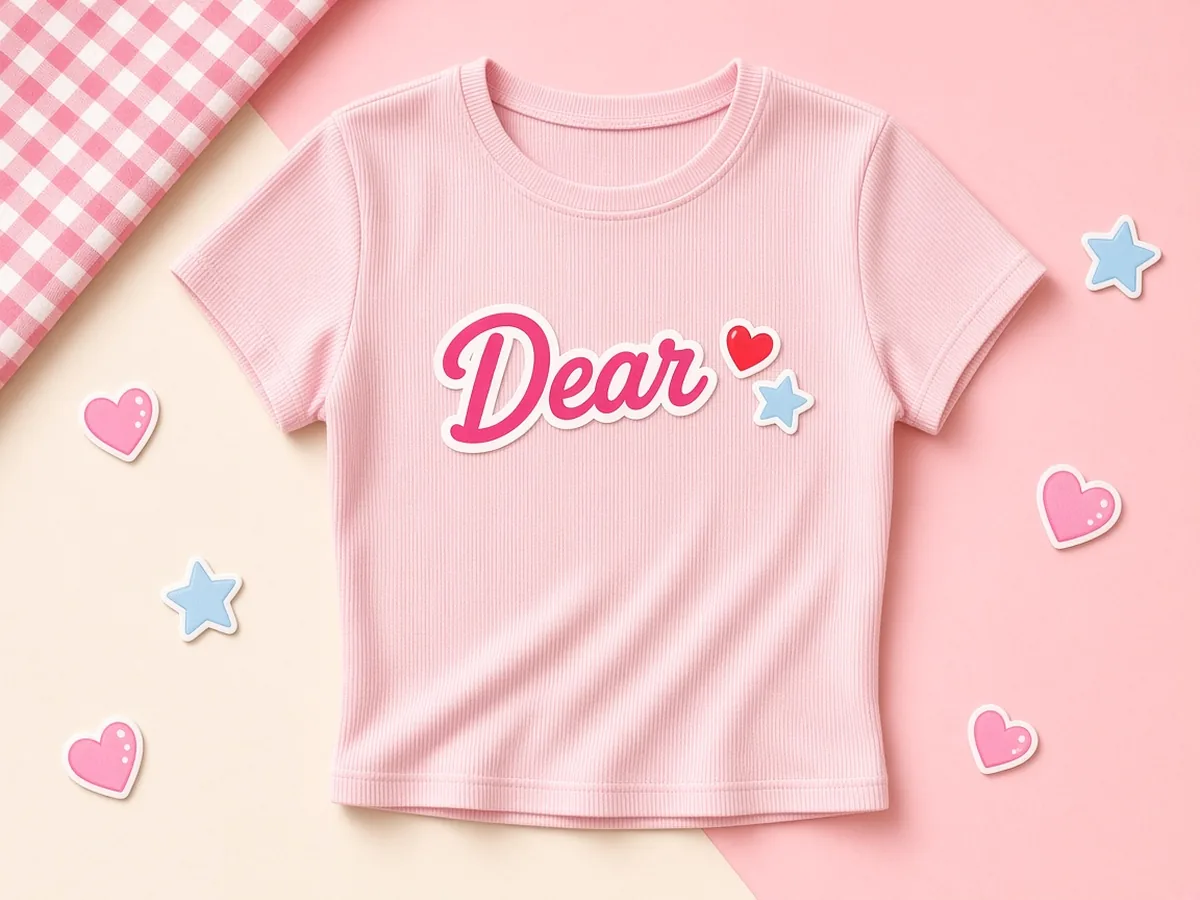
A baby tee is a small, close-fitting T-shirt with a few signature details. It sits snug through the shoulders and bust, the sleeves are short and often a little tight on the arm, and the hem usually lands somewhere around the natural waist or just above your low-rise jeans. The name comes from that “shrunken” look, like a tee that’s a size or two smaller than what you’d normally grab.
Compared with a regular tee, here’s what to expect:
- Length: a regular tee usually covers your waistband and hips. A baby tee is shorter by design, from a slight crop to a hem that just meets your jeans.
- Width: regular tees hang straight with room to spare. A baby tee follows your shape, with little or no extra ease.
- Sleeves: regular tee sleeves are loose and land mid-bicep. Baby tee sleeves are shorter and hug the arm.
- Neckline: usually a narrow crew neck, sometimes a scoop. The neckband is thin, which keeps the whole look delicate.
So if a baby tee feels fitted, that’s the point. What it shouldn’t feel is restrictive. You should be able to lift your arms, sit down, and breathe without the seams pulling or the hem riding way up.
How a baby tee should fit, head to hem
Shoulders
The shoulder seam should sit right at the edge of your shoulder or just slightly inside it. If it drops down your arm, the tee is too big for a true baby-tee look.
Bust and chest
Snug, smooth, no gaping. If the fabric pulls into horizontal lines across the chest, size up. Stretchy rib fabric is forgiving here, but it can only stretch so far before it starts looking strained.
Sleeves
Sleeves should hug your upper arm without pinching. A little stretch is normal. Red marks on your arm after an hour are not.
Length
This is the part that comes down to personal preference. Some people love a tee that shows a sliver of skin with high-waisted jeans; others want it to just meet a low-rise waistband. Before you order, decide where you want the hem to land and compare that with the garment length on the size chart.
How to measure yourself
You’ll need a soft measuring tape (or a piece of string and a ruler) and about five minutes. Wear a thin top or the bra you’d normally wear under a tee.
- Bust: wrap the tape around the fullest part of your chest, keeping it level across your back. Snug, but not tight.
- Waist: measure around your natural waist, which is usually the narrowest part of your torso, a little above your belly button.
- Shoulder width: measure across your back from the edge of one shoulder to the other. This one is much easier with a friend.
- Your ideal length: stand up straight and measure from the highest point of your shoulder (where it meets your neck) down to where you’d like the hem to sit.
The easiest trick of all: grab a tee you already love the fit of, lay it flat, and measure it. Measure straight across the chest from armpit to armpit, then from the top of the shoulder down to the hem. Those “flat” numbers are exactly what most garment size charts use, so you can compare apples to apples.
Reading a size chart (and our placeholder chart)
Size charts for baby tees usually list garment measurements, meaning the tee itself, laid flat. Because baby tees are meant to be fitted, the garment’s chest measurement will often be the same as, or a little smaller than, your body measurement, and the stretch of the fabric makes up the difference.
Important: our first Dear tee is still in development, so the chart below is a placeholder template only. The numbers are blank on purpose. We’ll fill in real, measured specs as soon as the final tee is confirmed, and we won’t guess in the meantime.
| Size | Chest, laid flat (in) | Length, shoulder to hem (in) | Sleeve length (in) |
|---|---|---|---|
| XS | TBD | TBD | TBD |
| S | TBD | TBD | TBD |
| M | TBD | TBD | TBD |
| L | TBD | TBD | TBD |
| XL | TBD | TBD | TBD |
Placeholder: final measurements coming once our product is finalized.
Between sizes?
Think about the look you want. For the classic shrunken, close-to-the-body fit, go with the smaller size. If you’d rather have a little more ease and length, or you plan to layer it over something, size up. When in doubt, compare against that tee you already own and love.
Micro-rib fabric: what to know
A lot of baby tees, including the one we’re planning, are made from micro-rib knit. That’s the fabric with fine vertical ribs you can see and feel. It’s popular for baby tees for good reason:
- Stretch and recovery: the ribbed structure stretches sideways and bounces back, so the tee hugs without feeling stiff.
- Soft drape: it follows your shape smoothly, which is what gives a baby tee that clean, fitted line.
- Texture: the fine ribs add a little visual interest, even on a plain tee.
Will it shrink?
Most micro-rib tees are cotton or a cotton blend, and cotton can shrink a bit, especially in hot water or a hot dryer. Rib knits can also get a little shorter and wider after washing as the ribs relax and settle. Exactly how much depends on the specific fabric, so always check the care label on your tee. A few habits help a lot:
- Wash cold, inside out, with similar colors.
- Skip the hot dryer. Lay it flat or hang it to dry, or tumble on low if you must.
- Gently reshape it while it’s damp, smoothing it back to its original length.
- Avoid bleach and heavy fabric softener, which can wear down fibers and any printed design.
- If there’s a print, don’t iron directly on it. Turn the tee inside out or use a pressing cloth.
If you’re right between sizes and you know you’ll be throwing it in the dryer anyway, that’s another vote for sizing up.
Quick fit checklist
- Shoulder seams at the edge of your shoulders
- Smooth across the chest, no pulling lines
- Sleeves snug but comfortable
- Hem lands where you want it with your favorite bottoms
- You can raise your arms without the tee riding up to your ribs
Baby tee vs. crop top vs. fitted tee
These three get mixed up all the time, and it’s the number one reason people end up with the wrong size. Here’s the quick version:
- Baby tee: short sleeves, a close fit through the whole body, and a hem that lands around your natural waist or the top of your jeans. It covers most of your torso, just in a smaller, shrunken shape.
- Crop top: cut intentionally short, usually well above the waist so the midriff shows. A crop top can be loose or tight; what defines it is the length.
- Fitted tee: follows your body like a baby tee, but at regular length, ending at or below the hips.
So if you want a little peek of skin with low-rise jeans but full coverage with high-waisted ones, a baby tee is the one. Want more? Our Y2K glossary entry on baby tees covers where the look came from.
Typical baby tee sizes: a general guide
Every brand cuts a little differently, so treat this as a general starting point, not a promise for any specific tee. These are common women’s body chest ranges that many brands use for letter sizes. Measure around the fullest part of your bust, then find your range.
| Letter size | Typical body bust (in) | Typical body bust (cm) | Fit tip |
|---|---|---|---|
| XS | about 30–32 | about 76–81 | Snug classic fit on petite frames |
| S | about 32–34 | about 81–86 | The “shrunken” look on many bodies |
| M | about 34–36 | about 86–91 | Size up from S if you want room to layer |
| L | about 37–39 | about 94–99 | Check length if you have a long torso |
| XL | about 40–42 | about 102–107 | Look for stretchy rib for comfort |
General guidance only. The Dear heart-and-star baby tee is still being finalized, and its exact measurements will be published here at launch.
The flat-lay trick (our favorite)
Grab a baby tee you already love and lay it flat on a table. Measure straight across from armpit to armpit, then from the highest point of the shoulder down to the hem. Write those numbers down. When you shop, compare them with the brand’s garment measurements. This beats guessing from the letter on the tag every single time.
Fit tips for different bodies
Long torso
Baby tees are short by design, so on a longer torso they can end higher than you expect. Check the shoulder-to-hem length, or size up one for an extra bit of length and pair it with mid-rise or high-waisted bottoms.
Fuller bust
Size for your bust first. If the fabric pulls into lines across the chest or a print stretches out of shape, go up a size. Stretchy micro-rib is much more forgiving here than flat jersey.
Broad shoulders
Look at where the shoulder seam sits. It should land on the edge of your shoulder, not partway down your arm and not up toward your neck. If it sits too far in, the tee will feel tight across your back when you reach.
Petite frame
Lucky you, the baby tee was basically made for this. Your usual size should give the classic look; just check that the sleeves don’t hang past mid-bicep.
Common fit problems (and easy fixes)
| Problem | What it usually means | Try this |
|---|---|---|
| Hem rides up when you lift your arms | Too short or too tight for your torso | Size up or look for a longer length |
| Sleeves dig into your arms | Narrow sleeve opening | Size up or pick a rib knit with more stretch |
| Neckline gapes or ripples | Too big through the shoulders | Size down |
| Pull lines across the chest | Not enough room at the bust | Size up for bust ease |
| Looks like a regular tee | Too big overall | Size down for the shrunken look |
Wait, is this about baby clothes?
Nope! Despite the name, a “baby tee” in fashion is an adult top. The “baby” just describes its small, shrunken fit. If you’re looking for infant T-shirts, you’ll want sizing by age and weight instead.
Baby tee fit FAQ
Should a baby tee be tight?
Close, not tight. It should skim your body and let you breathe, sit and raise your arms comfortably. If it digs in or pulls, go up a size.
Should I size up or down in a baby tee?
Your usual size gives the classic fitted look. Size up if you’re between sizes, want more length, or plan to layer it. Size down only if your normal size looks like a regular tee.
How long should a baby tee be?
Most land around the natural waist or just at the top of your waistband. With low-rise jeans that might show a little skin; with high-waisted bottoms it usually won’t.
Do baby tees shrink?
Cotton can shrink a bit, especially in a hot dryer. Wash cold and hang or lay flat to dry to keep the length you bought.
What size will the Dear tee come in?
We’re still finalizing the first Dear tee, and we’ll publish the real size chart before it goes on sale. Questions until then? Check our FAQ.
Keep reading
- How to style a baby tee: outfit ideas once you’ve found your fit
- Y2K fashion glossary: every term from shrugs to velour
- The original Dear line, 2007–2008
- Dear Lookbook and the Dear Journal
- About Dear, Drop News and Dear Club
Be first to know when Dear launches
We’re bringing back the kind of sweet, retro baby tees we always wished were easy to find, and we’ll publish real sizing for every piece before it goes on sale. Want early access and first dibs on sizes? Join the Dear waitlist and we’ll let you know the moment the first tees are ready.