A baby tee is supposed to fit like it was made for you: snug through the body, short in all the right places and never too tight across the chest. But size labels can be confusing, every brand cuts a little differently, and vintage pieces often run much smaller than modern ones.
The solution is simple, darling: a soft tape measure and five minutes. This guide shows you exactly how to measure yourself and a baby tee, how to adjust for petite and plus figures, how to pick the perfect crop length, and when to size up or down. Once you know your numbers, you will never order the wrong size again.
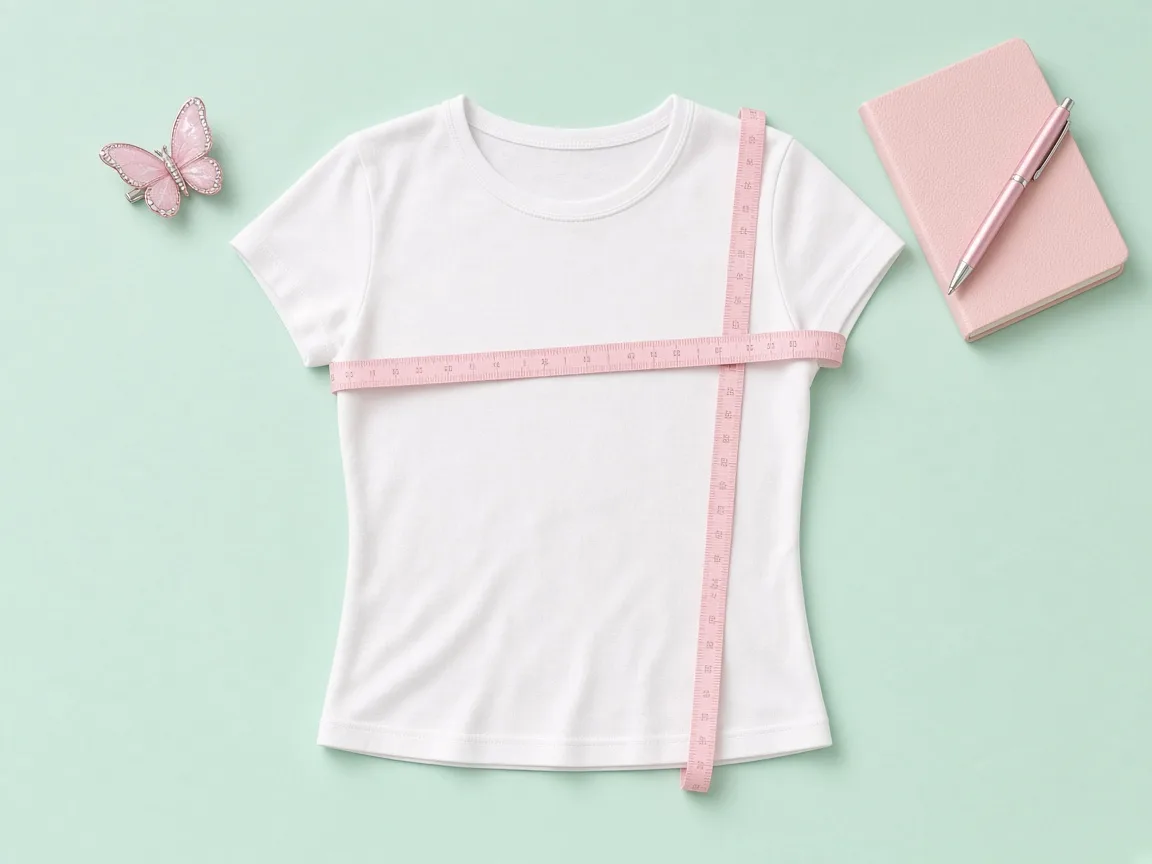
What you need
- A soft, flexible tape measure (not a metal one)
- A mirror, or a friend to help
- A thin, non-padded bra or the underwear you will usually wear with the tee
- A baby tee that already fits you well, if you have one
- A notebook or your phone to write down the numbers
Stand relaxed, breathe normally and keep the tape snug but not tight. You should be able to slide one finger under it.
Part 1: How to measure your body
Bust
Wrap the tape around the fullest part of your chest, keeping it parallel to the floor and flat across your back. This is the most important number for a baby tee, because the fit is closest here.
Waist
Find your natural waist, the narrowest part of your torso, usually just above the belly button. Measure around it with the tape level.
Torso length (for crop)
Measure from the highest point of your shoulder, right where it meets your neck, straight down the front of your body to where you want the tee to end. This is your ideal tee length. Try a few points:
- To the top of your favorite jeans’ waistband
- To your belly button
- To about two inches (5 cm) above your belly button
Shoulder width
Measure across your back from the edge of one shoulder bone to the other. Baby tees often have a narrow shoulder, so this helps you know whether a seam will sit on your shoulder or creep up your neck.
Part 2: How to measure a baby tee
Lay the tee flat on a table, smooth it out without stretching, and measure:
- Pit to pit (chest width): Measure straight across the front from one armpit seam to the other. Double this number to get the full chest circumference.
- Length: Measure from the highest point of the shoulder, next to the collar, straight down to the hem.
- Waist width: Measure across the narrowest point of the body and double it.
- Sleeve length: From the shoulder seam to the end of the sleeve.
- Shoulder width: Seam to seam across the back.
Then compare the tee’s numbers with your body’s numbers. That comparison tells you more than any size label ever could.
Part 3: How much ease do you want?
“Ease” is the difference between your body measurement and the garment’s measurement. Baby tees are usually made from stretchy rib or jersey, so they can have very little ease, or even a little negative ease (smaller than your body).
- Second-skin fit: Tee chest is 0 to 2 inches (0 to 5 cm) smaller than your bust. Very fitted and very classic, best in stretchy rib.
- Classic baby tee fit: Tee chest equals your bust or is up to 1 inch (2.5 cm) bigger. Snug but comfortable.
- Relaxed fit: Tee chest is 2 to 4 inches (5 to 10 cm) bigger than your bust. Softer, easier and more modern.
For the full size chart and how each Dear size is cut, visit our baby tee sizing and fit guide.
The crop length guide
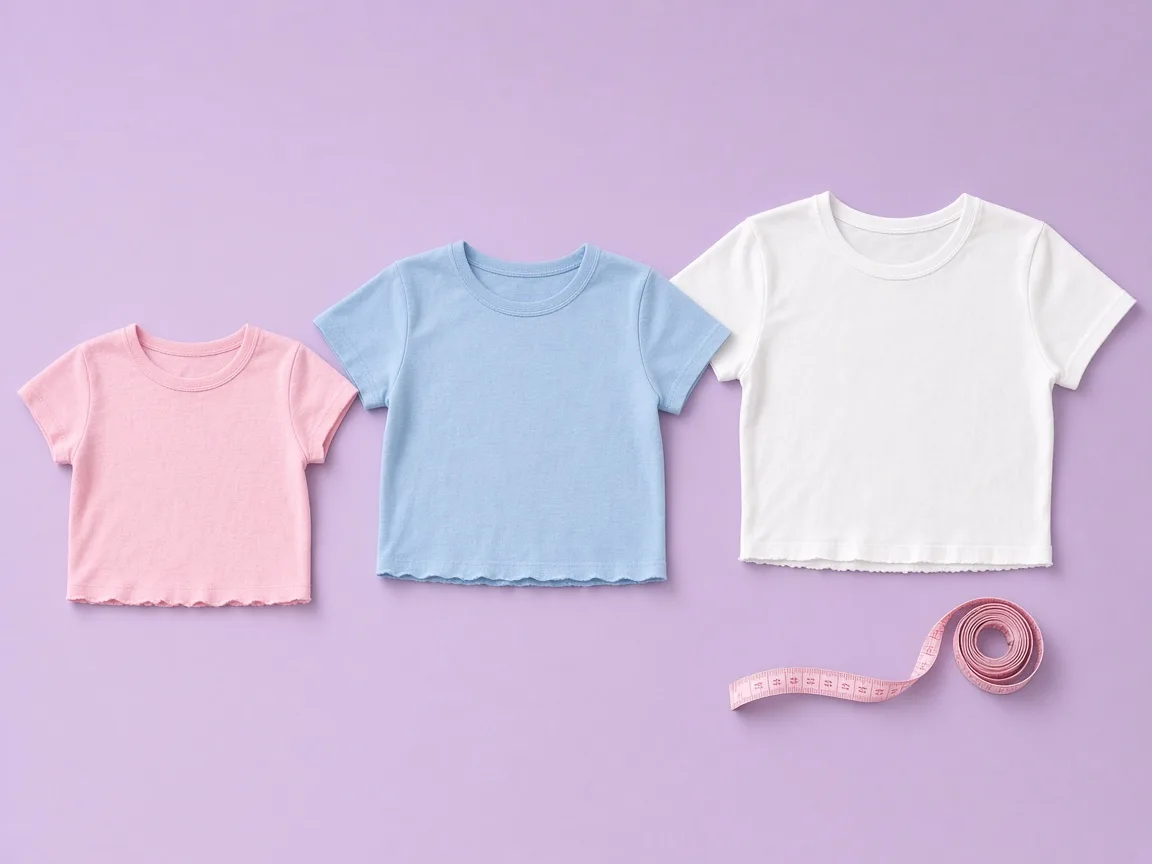
Crop length is personal, and it changes depending on what you pair it with. Use your torso length measurement and compare it to the tee’s length:
- Micro crop (ends 3+ inches above your belly button): A going-out length. Pairs well with high-waisted bottoms for balance.
- Classic crop (ends around the belly button): The signature baby tee look. Gorgeous with low-rise or mid-rise jeans.
- Waistband length (ends right at the top of your jeans): The most versatile and wearable option, with little or no midriff.
- Tuckable length (ends 1 to 2 inches below your waistband): Ideal if you prefer a front tuck or full tuck.
Planning to wear your tee with low-rise denim? Our new guide Low-Rise Jeans + Baby Tee: The Exact Outfit Formula shows exactly where the hem should land. For a definition of the classic silhouette, see the baby tee entry in our glossary.
Petite fit tips
If you are around 5’3″ (160 cm) or under, a few small adjustments go a long way:
- Check the length first. A “cropped” tee on a taller frame can become a regular tee on a petite one, and vice versa. Compare the tee length to your own torso length, not the model’s.
- Watch the shoulder seam. It should sit right at your shoulder bone. If it droops down your arm, the tee will look oversized, even if the chest fits.
- Short sleeves should stay short. A baby tee sleeve should end high on your upper arm. If it reaches your elbow, size down.
- Consider sizing down for length. If the chest has stretch to spare, the smaller size often gives a better crop on a petite torso.
Plus fit tips
Baby tees are for every body, and a great fit is all about the right numbers:
- Prioritize the bust measurement. Choose a tee whose chest is equal to or slightly larger than your bust, so the fabric skims rather than pulls.
- Look for stretch. Cotton with a bit of elastane, or a soft rib knit, moves with you and holds its shape.
- Check for pulling at the armholes. Diagonal lines from the armpit toward the bust mean you need more room. Size up.
- Add length if you want coverage. If you love the fitted look but prefer less midriff, pick a waistband or tuckable length and pair it with mid-rise bottoms.
- Measure the sleeve opening. A sleeve that is too tight can dig in. A little extra width keeps it comfortable.
When to size up or down
Size up when:
- The tee’s chest measurement is more than 2 inches (5 cm) smaller than your bust and the fabric has little stretch
- You want a relaxed, modern fit or plan to layer over a cami
- You are buying 100% cotton that has not been pre-shrunk
- The armholes or sleeves feel tight
Size down when:
- The shoulder seams fall past your shoulder bone
- The tee is longer than your ideal crop and the chest has stretch to spare
- You want the classic second-skin fit and the fabric is a stretchy rib
Vintage sizing
Original early-2000s baby tees often run one to two sizes smaller than modern labels. Always ask sellers for pit-to-pit and length measurements before you buy. Our guide on where to buy authentic Y2K clothes has more tips for shopping secondhand.
Keep the fit after you buy
Even the perfect size can shrink in the wash. Cotton baby tees can lose up to half an inch (1 cm) of length after a hot dryer cycle, which matters a lot when your crop is precise. Wash cold, turn the tee inside out and dry flat. Our step-by-step guide on how to wash baby tees without shrinking covers everything.
Quick reference checklist
- Measure your bust, waist, torso length and shoulder width
- Measure a tee you love, flat, pit to pit and shoulder to hem
- Choose your fit: second-skin, classic or relaxed
- Choose your crop: micro, classic, waistband or tuckable
- Adjust for petite or plus using the tips above
- Size up for coverage and comfort, size down for a closer, shorter fit
Frequently asked questions
Should a baby tee be tight?
Fitted, not tight. You should be able to lift your arms and move comfortably without the fabric pulling across the bust.
What if I am between sizes?
Choose based on the fit you want. Size up for a relaxed fit and more length, size down for a classic snug fit and shorter crop.
Do baby tees stretch out over time?
Good rib and cotton-elastane blends hold their shape well. Pure cotton jersey may relax slightly with wear, so a snug fit at first is normal.
Now that you know your numbers, it is time for the fun part. Find your favorite fit, then get styling ideas in how to style a baby tee and our Y2K outfit ideas. And join the Dear Club for first access to new colors and sizes, darling.